
Guide template: follow one Cloudflare request
A complete Orange Book Guide pattern from outcome and prerequisites to checkpoints.
Edited and verified by Orange Book Editorial Team ·
Outcome
You can place DNS, the Cloudflare edge, a Worker, and the origin on one request path and know which layer to inspect first.
Prerequisites
- Know that a domain name points visitors to a site; no coding is required.
- A test hostname proxied through Cloudflare makes the checks easier to follow.
Build the mental model first
When a DNS record is proxied, the request reaches the Cloudflare edge. The edge can terminate TLS, apply security policy, evaluate cache behavior, and run a Worker when a route matches.
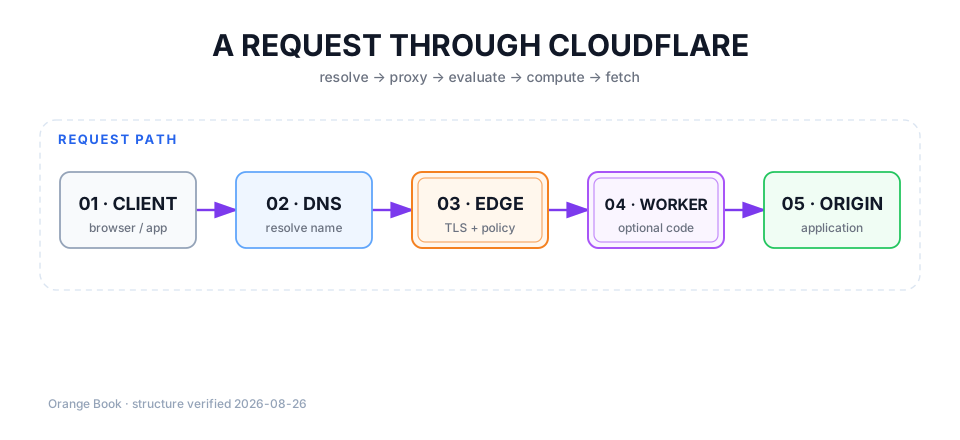
Detailed description
- 01Client
A browser or application starts the request.
- 02DNS
Resolves the hostname and determines proxying.
- 03Edge
Handles TLS, security policy, and cache decisions.
- 04Worker
Optionally rewrites, authorizes, or composes.
- 05Origin
Produces content when the edge needs it.
Verify one layer at a time
Confirm DNS and proxy status
Check the hostname, record type, and value in the Dashboard. The orange cloud controls proxying; it does not promise a cache result.
Inspect response headers
curl -I https://example.com/assets/app.cssRead CF-Cache-Status. A first MISS followed by a HIT usually means the object was eligible and then filled into cache.
Narrow the failing layer
Start with the record for DNS failures, the certificate path for TLS failures, and the cache-status runbook for DYNAMIC or BYPASS.
Checkpoint
You should now be able to draw five nodes and explain why “proxied” and “cache hit” are different statements.
Pitfalls and next step
- Proxying does not mean HTML, JSON, or responses with cookies are automatically cached.
- A Worker can be part of the path, but every site does not need one.
- Continue with the first edge application learning path.
Primary sources
Did this page help you complete your goal?
Beta feedback is generated in this browser and is never uploaded automatically.
Build Cloudflare applications with AI assistance
Give AI current context, constraints, and an acceptance contract before generating, reviewing, and verifying a normal Web application.
R2 migration playbook: Super Slurper, Sippy, or rclone
Choose an R2 migration path by downtime model, object limits, and verification requirements, then plan a gradual and reversible cutover.